
The world of quality management is evolving faster than ever. For decades, ISO 9001 has provided a stable framework for organizations to ensure consistent quality, customer satisfaction, and continual improvement. But as we move closer to ISO 9001:2026, a new reality is emerging—one driven by Artificial Intelligence (AI), digital transformation, and real-time data.
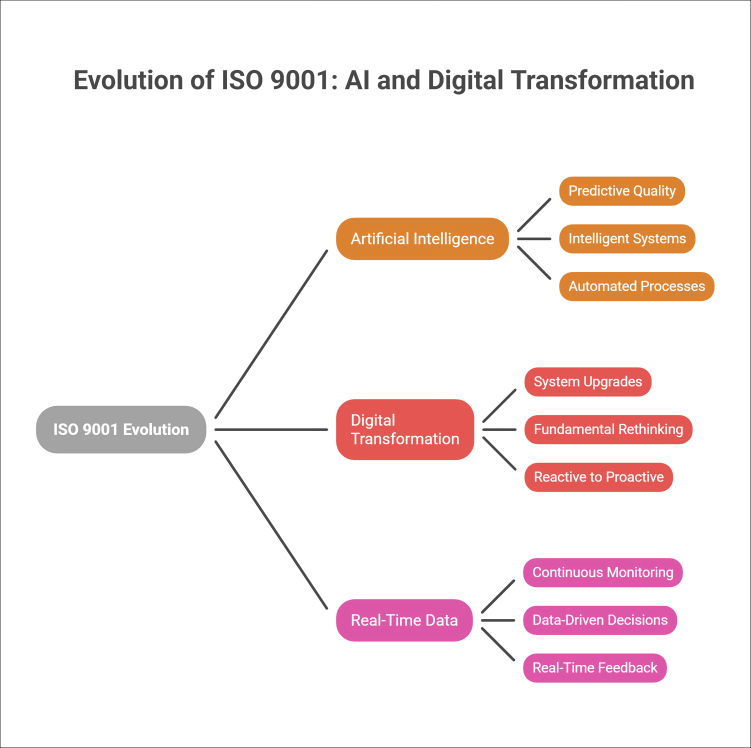
This shift isn’t just about upgrading systems. It’s about fundamentally rethinking how quality is managed, measured, and improved. Instead of reactive approaches – fixing issues after they occur – organizations are now moving toward predictive, intelligent, and automated quality management systems.
So, what does this mean for ISO 9001? And more importantly, how should organizations prepare?
Let’s break it down in a practical, real-world way.
The Evolution of ISO 9001 Toward 2026
ISO 9001:2015 introduced risk-based thinking, leadership accountability, and a process-driven approach. These changes pushed organizations to become more proactive and structured.
ISO 9001:2026 is expected to take this further by aligning with digital ecosystems and intelligent technologies.
- Stronger emphasis on data-driven decision-making
- Integration of AI and advanced analytics into QMS processes
- Increased focus on organizational knowledge and digital documentation
- Alignment with standards like ISO/IEC 42001 (AI management systems)
- Greater expectations for real-time monitoring and continuous compliance
In simple terms, ISO 9001 is moving from a “documented system” to a “digital and intelligent system.”
Understanding AI in Quality Management
Artificial Intelligence in quality management is not about replacing people—it’s about augmenting human decision-making with better insights.
How AI is Transforming QMS
Predictive Quality Control
AI analyzes historical and real-time data to predict defects before they occur.
Example: A manufacturing unit uses AI to monitor machine vibration patterns and predicts defects before nonconforming products are produced.
Automated Root Cause Analysis
- Correlates process variables
- Identifies hidden patterns
- Suggests probable root causes
Intelligent CAPA Systems
- Recommends actions based on past cases
- Tracks effectiveness automatically
- Flags recurring issues early
Voice of Customer (VoC) Analytics
AI-powered NLP analyzes customer complaints, reviews, and feedback to identify trends and improve satisfaction.
Digital Transformation: The Backbone of Modern QMS
AI cannot function effectively without digital transformation. Digitalization enables data collection, integration, and analysis.
- Cloud-based platforms for centralized access
- Automated workflows for approvals, audits, and CAPA
- Integration with ERP, CRM, and production systems
- Real-time dashboards and analytics
This creates a connected ecosystem where quality becomes part of every business process.
Mapping AI to ISO 9001 Clauses
| Clause | AI Application |
|---|---|
| Clause 4 | AI analyzes risks, trends, and stakeholder expectations |
| Clause 5 | Real-time dashboards improve leadership decisions |
| Clause 6 | Predictive analytics strengthens risk-based thinking |
| Clause 7 | AI-driven knowledge management and document control |
| Cause 8 | Automation ensures process consistency |
| Clause 9 | Real-time KPIs and continuous monitoring |
| Clause 10 | AI suggests improvement opportunities |
Benefits of AI and Digital Transformation
- Proactive Quality Management
- Faster Decision-Making
- Reduced Operational Costs
- Enhanced Customer Satisfaction
- Scalable QMS
Challenges You Must Address
- Data quality issues
- Integration with legacy systems
- Skill gaps in AI and analytics
- Transparency and compliance requirements
- Resistance to change
Practical Steps to Get Started
Step 1: Assess your current QMS
Step 2: Digitize documentation
Step 3: Introduce AI gradually
Step 4: Strengthen data governance
Step 5: Upskill your team
Step 6: Align with future standards
The Future of Quality Management
- Continuous auditing instead of periodic audits
- Predictive insights replacing reactive actions
- Fully integrated systems across departments
- AI-assisted decision-making at all levels
Organizations that embrace this shift will not just comply with ISO 9001—they will lead their industries.
Those who delay may struggle to keep up.