
1.Overview of ISO 27001 Updates
As technology continues to advance, cybersecurity remains a top priority for organizations worldwide. With the release of the latest updates in ISO 27001, professionals in the industry are facing the challenge of staying up to date with the changing landscape of information security standards. This comprehensive guide aims to provide professionals with a toolkit to navigate the latest updates in ISO 27001, ensuring that organizations can effectively implement and maintain robust information security management systems. Whether you are new to ISO 27001 or a seasoned professional, this guide is designed to help you stay ahead of the curve in an ever-evolving cybersecurity environment.

2.Key Changes and Implications for Professionals
- The latest updates in ISO 27001 bring forth significant changes that professionals need to be aware of to enhance their organization’s information security posture. Understanding these key changes and their implications is crucial for ensuring compliance and maximizing the effectiveness of information security management systems.
- In the upcoming section, we will delve into the specific modifications introduced in ISO 27001 and explore how professionals can adapt their practices to align with these updates. Stay tuned to gain insight into the essential shifts that will impact professionals in the cybersecurity landscape.
- Furthermore, the updated standard emphasizes the importance of risk-based thinking and a proactive approach to managing information security risks. This shift towards a more dynamic and flexible risk management process underscores the need for organizations to continuously assess and adapt their security measures to stay ahead of emerging threats.
- In addition, ISO 27001 emphasizes top management’s role in driving a culture of information security throughout the organization. This includes promoting leadership involvement in setting strategic objectives, monitoring performance, and ensuring ongoing improvements to the information security management system.
Overall, professionals in the cybersecurity landscape must familiarize themselves with these key changes in ISO 27001 and take proactive steps to align their practices with the updated standard. By staying informed and implementing these modifications effectively, organizations can enhance their information security posture and better protect their assets against cyber threats.
3. Understanding the New Requirements for Data Security
The latest updates in ISO 27001:2022 introduce new requirements for data security that professionals must grasp to secure their organization’s information assets effectively. By comprehensively understanding these new mandates, professionals can proactively implement robust data security measures to mitigate risks and safeguard sensitive information. In this section, we will dissect the updated data security requirements in ISO 27001 and provide actionable insights on how professionals can align their data security practices with these stringent standards. Stay informed to effectively navigate the evolving landscape of data security and bolster your organization’s defenses against potential cyber threats.
Some of the key updates in ISO 27001 related to data security include:
- Enhanced Focus on Risk Assessment: The latest version of ISO 27001 emphasizes the importance of conducting thorough risk assessments to identify potential threats and vulnerabilities to data security. Professionals need to develop a comprehensive risk assessment process that encompasses all aspects of data security to ensure robust protection measures are in place.
- Data Encryption Requirements: ISO 27001 now includes specific requirements for data encryption to safeguard sensitive information from unauthorized access. Professionals must implement encryption technologies such as secure sockets layer (SSL) or transport layer security (TLS) to encrypt data both at rest and in transit.
- Secure Data Storage Practices: The updated standard emphasizes the need for secure data storage practices to prevent data breaches and unauthorized access. Professionals should implement secure storage solutions, such as encrypted databases or secure cloud storage, to protect sensitive information from being compromised.
- Data Access Controls: ISO 27001 introduces stringent data access control requirements to limit access to sensitive information only to authorized personnel. Professionals must implement strict access control mechanisms, such as role-based access controls and multi-factor authentication, to prevent unauthorized access to critical data.
- Incident Response and Data Breach Management: The latest version of ISO 27001 emphasizes the importance of having a robust incident response and data breach management plan in place. Professionals should develop comprehensive procedures for detecting, responding to, and mitigating data security incidents to minimize the impact of potential breaches.
By staying abreast of these new data security requirements in ISO 27001, professionals can proactively enhance their organization’s data security posture and effectively mitigate risks. By implementing robust data security measures aligned with these stringent standards, organizations can safeguard their sensitive information assets and protect against potential cyber threats.
4.Implementing Best Practices for Compliance
- Implementing best practices for compliance with the latest ISO 27001:2022 updates is crucial for organizations seeking to adhere to stringent data security standards. Professionals must focus on conducting regular risk assessments, implementing access controls, and ensuring strict compliance with data protection regulations. Additionally, fine-tuning incident response procedures and regularly updating security policies are vital components of maintaining compliance.
- By prioritizing these best practices, professionals can effectively strengthen their organization’s data security posture and continuously adapt to emerging cyber threats. Stay tuned for expert tips on achieving and maintaining compliance with ISO 27001 to fortify your organization’s defense against data breaches and unauthorized access.
- It is important for organizations to stay up-to-date with the latest ISO 27001 updates in order to ensure compliance with data security standards. One key best practice is to conduct regular risk assessments to identify potential vulnerabilities and weaknesses in the organization’s data security systems. This allows organizations to proactively address any potential risks before they can be exploited by malicious actors.
- Implementing access controls is another crucial best practice for compliance with ISO 27001. This includes restricting access to sensitive data and systems to only authorized personnel, as well as implementing strong authentication measures such as multi-factor authentication.
- In addition, organizations must ensure they are in strict compliance with data protection regulations, such as GDPR or CCPA, to avoid potential fines and penalties. This includes implementing appropriate data handling practices, as well as obtaining any necessary certifications or audits to demonstrate compliance.
- Fine-tuning incident response procedures is also essential for compliance with ISO 27001:2022. Organizations should regularly test their incident response plans and procedures to ensure they are effective in the event of a data breach or security incident.
- Finally, regularly updating security policies to reflect changes in technology and emerging cyber threats is a best practice for maintaining compliance with ISO 27001. This helps ensure that organizations are continuously adapting their security measures to protect against the latest threats.
Overall, by prioritizing these best practices for compliance with ISO 27001:2022, organizations can strengthen their data security posture and minimize the risk of data breaches and unauthorized access.
5. Training and Education for Professionals in ISO 27001
- In order to successfully navigate the latest updates in ISO 27001, professionals must prioritize ongoing training and education. Staying informed about the evolving landscape of data security regulations is key to implementing best practices effectively. Consider enrolling in courses tailored to the new ISO guidelines, attending relevant workshops, and obtaining certifications to demonstrate your competence in ensuring compliance.
- By investing in continuous learning, professionals can enhance their expertise, stay ahead of emerging threats, and contribute significantly to their organization’s data security efforts. Stay tuned for valuable insights on the importance of training and education in maintaining compliance with ISO 27001 standards.
- Additionally, professionals should also actively participate in industry conferences, webinars, and networking events to stay updated on the latest trends and developments in data security. Engaging with peers and industry experts can provide valuable insights and perspectives on how to effectively implement ISO 27001 requirements within their organization.
- Furthermore, professionals should regularly review and analyze the latest guidance and resources provided by ISO and other regulatory bodies to ensure their organization’s compliance with the latest standards. By staying informed and proactively seeking out new information, professionals can effectively navigate the changing landscape of data security regulations and protect their organization from potential risks and threats.
Ongoing training and education are essential for professionals to successfully navigate the evolving landscape of data security regulations, particularly with the introduction of ISO 27001. By investing in continuous learning and staying informed about the latest updates and best practices, professionals can enhance their expertise, contribute significantly to their organization’s data security efforts, and maintain compliance with the latest standards.
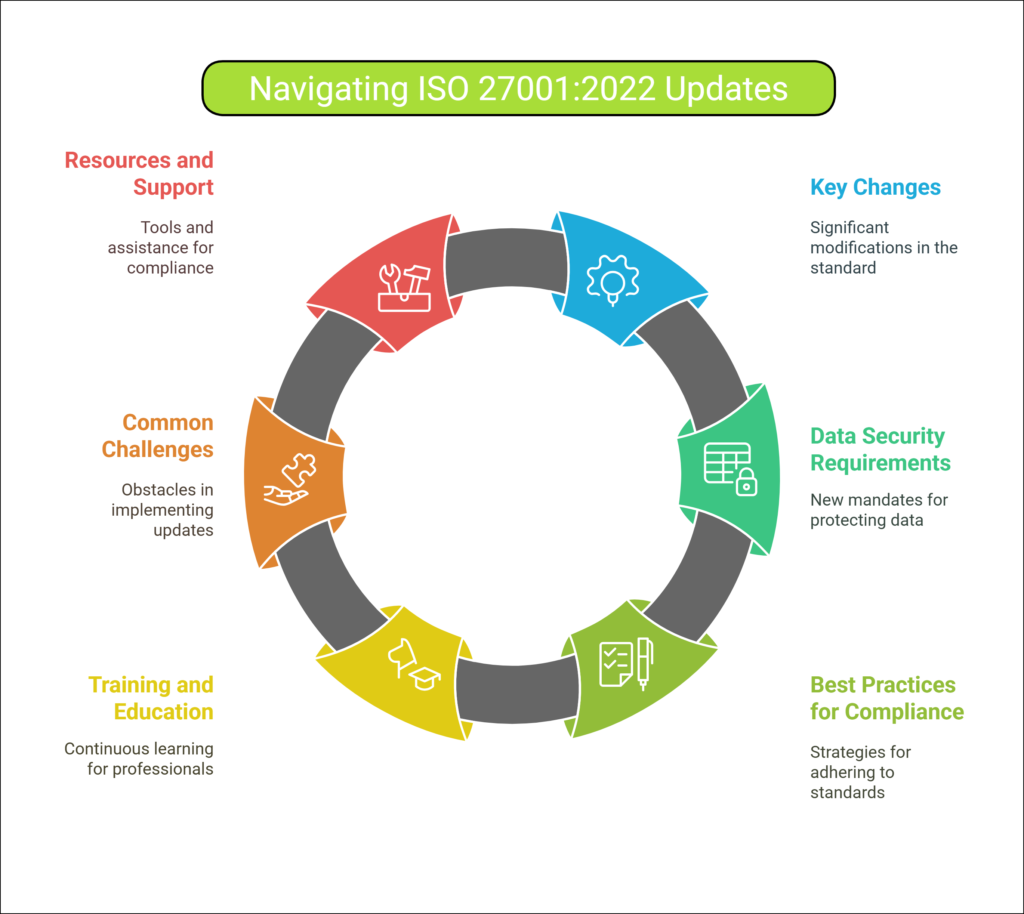
6. Addressing Common Challenges in Navigating the Updates
As professionals delve into the latest updates of ISO 27001:2022, they may encounter common challenges that could hinder their implementation efforts. These challenges can range from aligning existing practices with the new standards to managing resources effectively for compliance.
Understanding and addressing these obstacles is crucial for a smooth transition to the updated guidelines. In the upcoming section, we will explore some of the most prevalent challenges faced by professionals in navigating the updates and provide practical strategies to overcome them. Stay tuned for actionable advice on overcoming common hurdles and ensuring successful adoption of the new ISO 27001 standards.
7. Resources and Support for Professionals Seeking Compliance
Navigating the complex world of ISO 27001 requires access to reliable resources and comprehensive support systems. Professionals looking to ensure compliance with the latest standards can benefit greatly from leveraging a variety of tools and assistance available. In the upcoming section, we will discuss key resources such as online training modules, expert consultations, and industry-specific forums that can aid professionals in their compliance journey. Stay tuned for valuable insights on how to tap into these resources effectively and optimize your approach to meeting the requirements of ISO 27001:2022. Assuring compliance has never been more achievable with the right support at your disposal.
8. Conclusion: Navigating ISO 27001 Updates with Confidence
Staying abreast of the latest updates in ISO 27001 is crucial for professionals committed to maintaining robust information security management systems. By harnessing the power of online training modules, expert consultations, and industry-specific forums, individuals can fortify their compliance strategies and ensure alignment with the stringent requirements of the standard. Remember, compliance is not a one-time effort but an ongoing commitment to excellence in safeguarding sensitive information. With the right resources and support systems at your disposal, you can navigate the complexities of ISO 27001 with confidence and set a strong foundation for securing your organization’s data assets. Stay proactive, stay informed, and stay compliant.