
In today’s digital landscape, navigating the complexities of cybersecurity is essential for organizations of all sizes. One prominent standard that has gained global recognition is ISO 27001:2022. This standard provides a systematic approach to managing sensitive company information, ensuring its confidentiality, integrity, and availability. However, many organizations find themselves wondering how ISO 27001:2022 relates to other cybersecurity frameworks. In this article, we will explore the interconnectedness of ISO 27001:2022 with other notable frameworks while highlighting their collective importance in establishing robust cybersecurity measures.
Understanding ISO 27001:2022
ISO 27001:2022 is part of the ISO/IEC 27000 family of standards and provides a framework for Information Security Management Systems (ISMS). The primary objectives of this standard include:
1. Establishing an ISMS
- This ensures that all aspects of information security management are considered, from policies and risk management to incident response.
- Establishing an Information Security Management System (ISMS) is crucial for organizations to effectively protect their sensitive data and assets. By implementing an ISMS, companies can ensure that all aspects of information security management are thoroughly considered and integrated into their operations.
- This includes developing robust policies and procedures for handling and safeguarding information, conducting ongoing risk assessments to identify vulnerabilities and threats, and creating a comprehensive incident response plan to effectively mitigate and manage security breaches. By establishing an ISMS, organizations demonstrate their commitment to protecting the confidentiality, integrity, and availability of their information assets, ultimately bolstering trust with stakeholders and minimizing the potential impact of cyber threats.
- Therefore, investing in the establishment of an ISMS is essential for any organization looking to maintain a strong and resilient security posture in today’s increasingly interconnected and digital landscape.
2. Continuous Improvement
- It emphasizes the importance of continual evaluation and improvement of the ISMS through regular audits and risk assessments.
- Continuous Improvement is a vital aspect of maintaining a strong Information Security Management System (ISMS). By continually evaluating and improving the ISMS through regular audits and risk assessments, organizations can ensure that their systems are up-to-date and able to effectively protect against potential threats.
- This ongoing process allows for the identification of any weaknesses or vulnerabilities in the system, leading to the implementation of necessary changes and updates to strengthen security measures. By committing to a culture of continuous improvement, organizations can adapt to the ever-evolving landscape of cyber threats and better protect their sensitive information.
- Additionally, regular assessments and audits provide valuable insights into the effectiveness of security measures, allowing for adjustments to be made as needed to maintain a high level of security for the organization and its stakeholders.
3. Compliance and Trust
- Achieving ISO 27001 certification demonstrates an organization’s commitment to information security, fostering trust amongst stakeholders and customers.
- Obtaining ISO 27001 certification is not just about meeting a set of standards; it is a declaration of an organization’s dedication to maintaining the highest levels of information security. By undergoing the rigorous process to achieve this certification, businesses are showcasing their commitment to protecting sensitive data and ensuring the confidentiality, integrity, and availability of their information. This not only helps to strengthen internal processes and security measures but also builds trust with stakeholders and customers.
- When organizations can show that they have met the stringent requirements set forth by ISO 27001, it instills confidence in their ability to handle information securely and responsibly. This level of compliance inspires trust, demonstrating to clients and partners that the organization takes their data security seriously and prioritizes safeguarding their confidential information.
- Ultimately, achieving ISO 27001 certification is not just a badge of honor, but a crucial step in establishing a strong foundation of trust and credibility within the business community.
ISO 27001:2022 and Other Cybersecurity Frameworks
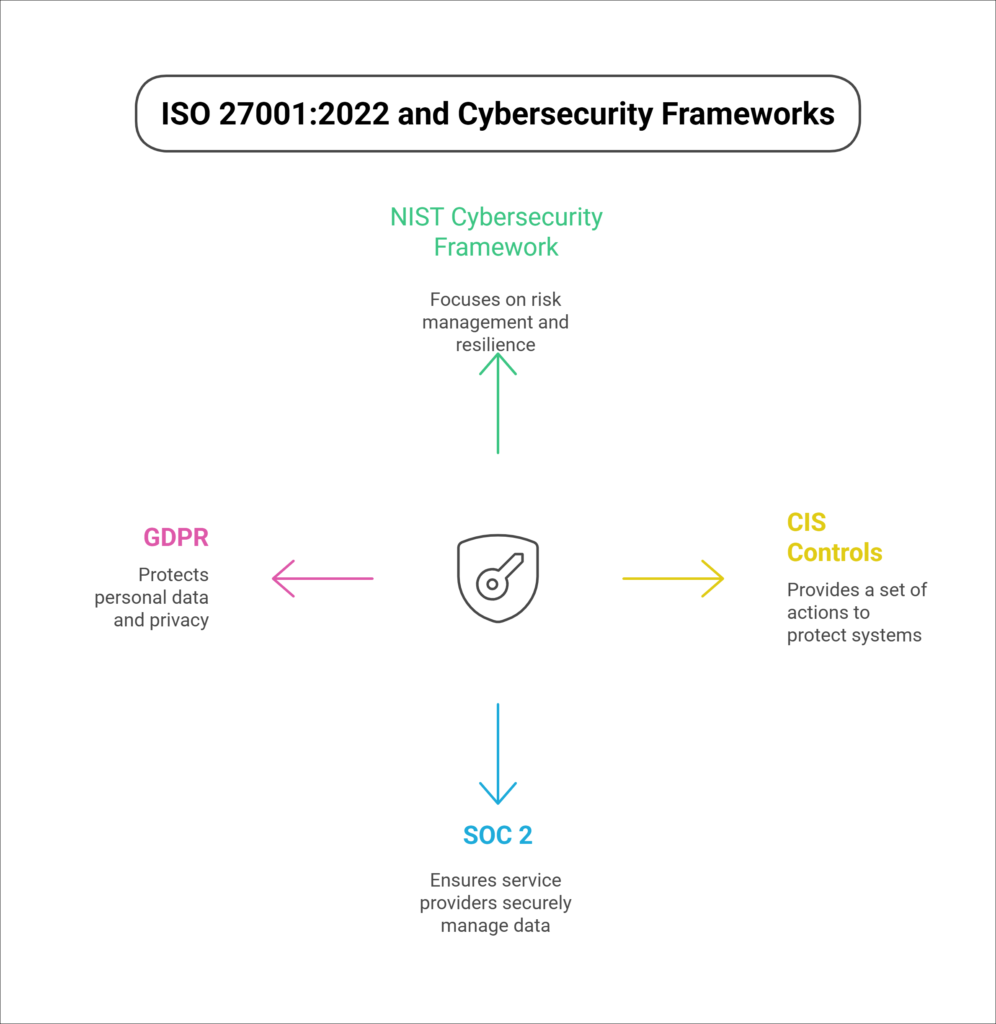
Numerous cybersecurity frameworks exist, each with unique features and focuses. The relationship between ISO 27001:2022 and these frameworks is primarily based on complementary practices that enhance an organization’s security posture. Let’s examine a few of these frameworks.
The ISO 27001:2022 standard provides a comprehensive framework for implementing an Information Security Management System (ISMS) within an organization. It includes guidelines for identifying, assessing, and managing information security risks, as well as establishing controls to mitigate these risks.
In addition to ISO 27001:2022, other popular cybersecurity frameworks include NIST Cybersecurity Framework, CIS Controls, and COBIT. Each of these frameworks offers its own set of best practices and guidelines for improving cybersecurity.
ISO 27001:2022 focuses on establishing an ISMS, the NIST Cybersecurity Framework provides a more detailed approach to identifying, protecting, detecting, responding, and recovering from cybersecurity incidents. On the other hand, CIS Controls offer a prioritized set of actions that organizations can take to enhance their cybersecurity defenses. COBIT, on the other hand, focuses on aligning information technology with business goals and objectives, making it a valuable framework for organizations looking to improve their overall governance and risk management practices.
By understanding the different features and focuses of these cybersecurity frameworks, organizations can create a more robust and effective cybersecurity strategy that incorporates the best practices from each framework.
1. NIST Cybersecurity Framework (NIST CSF)
The NIST Cybersecurity Framework (NIST CSF) offers a comprehensive approach to managing cybersecurity risk. Its core structure is built around five major functions: Identify, Protect, Detect, Respond, and Recover.
- Integration with ISO 27001: The NIST CSF can be aligned with ISO 27001 by mapping its categories and subcategories to the controls specified in ISO 27001 A.5 to A.18, which cover a variety of security domains, such as access control, incident management, and cybersecurity training.
- Complementary Guidance: While ISO 27001 focuses on policy and management aspects, NIST CSF provides practical guidance for specific technical controls. Thus, organizations can utilize both frameworks for a well-rounded security strategy.
2. COBIT (Control Objectives for Information and Related Technologies)
COBIT is a governance framework emphasizing effective IT management and governance, particularly in risk management and resource optimization.
- Governance Alignment: Organizations implementing COBIT can leverage the structure and guidance of ISO 27001 to ensure their information security strategy is aligned with broader business objectives.
- Shared Objectives: Both frameworks stress the importance of continuous improvement and adaptability to threats, which means they can function synergistically in promoting a stable security environment.
3. PCI DSS (Payment Card Industry Data Security Standard)
For organizations handling credit card transactions, PCI DSS sets specific security standards to protect cardholder information.
- ISO 27001 as a Foundation: Implementing ISO 27001 can aid in building the necessary systems and processes that also meet PCI DSS compliance requirements. The risk management practices outlined in ISO 27001 can help organizations address PCI DSS’s requirements more effectively.
- Common Controls: Many security controls in ISO 27001 overlap with PCI DSS, thereby creating opportunities for organizations to streamline their compliance processes and enhance overall cybersecurity resilience.

The Benefits of Integrating Frameworks
Integrating ISO 27001:2022 with other cybersecurity frameworks brings several advantages to organizations:
- Holistic Security Approach: By adopting multiple frameworks, organizations can ensure a comprehensive approach to managing security threats from various sources.
- Streamlined Compliance: Integration can lead to more efficient compliance management, where organizations avoid duplicated efforts while addressing various regulations and standards.
- Enhanced Risk Management: By leveraging the strengths of different frameworks, organizations can enhance their risk management protocols, making them more resilient against data breaches and cyber threats.
Conclusion
ISO 27001:2022 plays a pivotal role in the realm of cybersecurity, serving as a foundational standard that can be effectively integrated with various cybersecurity frameworks such as NIST CSF, COBIT, and PCI DSS. By recognizing the relationship and leveraging the strengths of these standards, organizations can create a more robust and comprehensive cybersecurity strategy. In an era where cyber threats are prevalent and increasingly sophisticated, a multidimensional approach to information security is not just recommended; it is imperative for organizational success and sustainability. Embracing this mindset will not only enhance security posture but will also build trust with stakeholders and clients in an ever-changing digital world.