
The ISO 27001 standard is crucial for organizations looking to establish, implement, maintain, and continually improve an information security management system. With the recent release of ISO 27001:2022, it is essential for professionals in the field to understand the key differences between this latest version and its successor, ISO 27001:2013. Navigating these changes can be challenging, but it is necessary to ensure that your organization remains compliant and secure in an ever-evolving digital landscape. This blog will delve into the crucial variances between ISO 27001:2013 and ISO 27001:2022, providing you with the knowledge you need to stay ahead of the curve.

Understanding ISO 27001:2013 Vs. ISO 27001:2022
ISO 27001 is an internationally recognized standard for information security management systems. The standard outlines the requirements for establishing, implementing, maintaining, and continually improving an information security management system within an organization.
The latest version of the standard, ISO 27001:2022, was released in 2022 and is an update to the previous version, ISO 27001:2013. The main difference between the two versions lies in the updates and revisions made to the standard.
Some of The Key Changes in ISO 27001:2022 Compared to ISO 27001:2013 Include
- The Addition of New Requirements and Controls – ISO 27001:2022 includes new requirements and controls to address emerging technologies and threats in the digital landscape.
- Greater Emphasis on Risk Management – The new version of the standard places a greater emphasis on risk management and requires organizations to take a more proactive approach to identifying and addressing security risks.
- Enhanced Focus on Business Continuity – ISO 27001:2022 places a stronger focus on business continuity planning and requires organizations to have robust processes in place to ensure the continued availability of their information systems and data.
- Improved Alignment with Other Standards – The latest version of the standard has been revised to align more closely with other international standards, such as ISO 9001 for quality management systems and ISO 14001 for environmental management systems.
Overall, ISO 27001:2022 builds upon the foundation established by the previous version of the standard and provides organizations with a more comprehensive framework for managing and enhancing their information security practices. By implementing the latest version of the standard, organizations can demonstrate their commitment to protecting their information assets and staying ahead of evolving cybersecurity threats.
Key Differences In Requirements And Approach
- Delving further into the transition from ISO 27001:2013 to ISO 27001:2022 reveals significant differences in requirements and approach. The updated version places a stronger emphasis on risk assessment and management, with a more streamlined and integrated approach to information security. Additionally, ISO 27001:2022 introduces new controls and restructured processes to adapt to evolving cyber threats and technological advancements.
- Understanding and implementing these changes are crucial for organizations aiming to enhance their cybersecurity posture and align with the latest standards. Stay tuned as we delve deeper into these key disparities to help you navigate the transition effectively and ensure compliance.
- The transition from ISO 27001:2013 to ISO 27001:2022 marks a shift towards a more robust and comprehensive approach to information security. The updated version places a greater emphasis on risk assessment and management, highlighting the importance of proactively identifying and mitigating potential threats.
- The incorporation of new controls and restructured processes reflects the ever-evolving nature of cyber threats and technological advancements, requiring organizations to continuously adapt and improve their cybersecurity measures. It is essential for organizations to understand and implement these changes to bolster their cybersecurity posture and align with the latest industry standards.
Our ongoing exploration of these key differences aims to provide valuable insights for organizations as they navigate the transition and strive for compliance in an increasingly complex cybersecurity landscape.
Implications For Organizations Currently Certified to ISO 27001:2013
For organizations currently certified to ISO 27001:2013, the implications of the new ISO 27001:2022 standard will require a transition period to ensure compliance with the updated requirements. Some key implications for organizations include:
- Update of Information Security Management System (ISMS): Organizations will need to review and revise their existing ISMS to align with the new standard’s requirements. This may involve updating policies, procedures, and processes to address new or changed requirements.
- Increased Focus on Risk Management: The new standard places greater emphasis on risk management, including the identification and assessment of risks, as well as the implementation of appropriate controls to mitigate those risks. Organizations will need to enhance their risk management processes to meet the new standard’s expectations.
- Enhanced Cybersecurity Requirements: The new standard includes updated requirements related to cybersecurity, including the protection of information against cyber threats and the need for effective incident response and recovery. Organizations will need to strengthen their cybersecurity measures to ensure compliance with the new standard.
- Integration with Other Management Systems: The new standard aligns with the high-level structure of other ISO management system standards, making it easier for organizations to integrate their ISMS with other management systems such as quality or environmental management. Organizations will need to consider how to effectively integrate their ISMS with other systems to maximize overall efficiency and effectiveness.
- Training and Awareness: Organizations will need to provide training and awareness programs to ensure that employees are familiar with the updated requirements of the new standard and understand their roles and responsibilities in maintaining information security. This may involve conducting training sessions, workshops, and communication campaigns to ensure that all staff members are aware of their obligations under the new standard.
Overall, organizations currently certified to ISO 27001:2013 will need to take proactive steps to transition to the new ISO 27001:2022 standard and ensure ongoing compliance with its requirements. By addressing key implications such as updating the ISMS, enhancing risk management processes, strengthening cybersecurity measures, integrating with other management systems, and providing training and awareness, organizations can successfully navigate the transition and continue to demonstrate their commitment to information security.
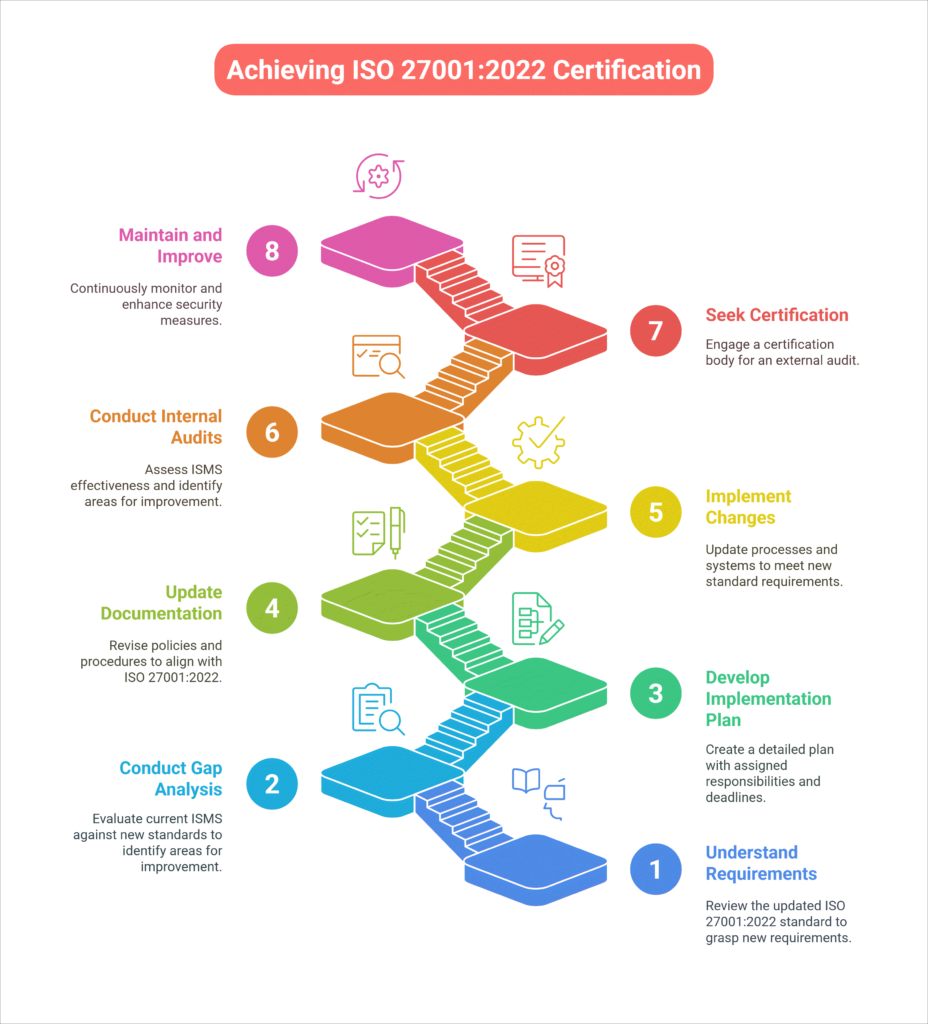
Steps For Transitioning to ISO 27001:2022
- Familiarize Yourself with the Updated Requirements: Start by thoroughly reviewing the updated ISO 27001:2022 standard to understand the new requirements and changes from the previous version.
- Conduct a Gap Analysis: Evaluate your current Information Security Management System (ISMS) against the new requirements of the ISO 27001:2022 standard. Identify any gaps and areas that need improvement.
- Develop an Implementation Plan: Based on the results of the gap analysis, create a detailed plan outlining the steps needed to transition to ISO 27001:2022. Assign responsibilities, set deadlines, and allocate resources accordingly.
- Update your Documentation: Review and update your existing policies, procedures, and documentation to align with the requirements of ISO 27001:2022. This may include revising risk assessments, control objectives, and other relevant documents.
- Implement Necessary Changes: Implement any changes or improvements identified during the gap analysis phase. This may involve updating processes, controls, and systems to meet the new requirements of the standard.
- Conduct Internal Audits: Before seeking certification, conduct internal audits to assess the effectiveness of your ISMS in meeting the requirements of ISO 27001:2022. Identify any areas for improvement and take corrective actions as needed.
- Seek Certification: Once you are confident that your ISMS is in compliance with the ISO 27001:2022 standard, engage a certification body to conduct an external audit. If successful, you will receive a certificate demonstrating your organization’s commitment to information security.
- Maintain and Continuously Improve: Information security is an ongoing process. Maintain your certification by regularly monitoring and evaluating your ISMS. Continuously improve your security measures to stay ahead of evolving threats and meet the changing requirements of the standard.
Training And Support for Implementing The New Standard
Investing in comprehensive training is crucial for successfully implementing the updated ISO 27001:2022 standard. Organize training sessions to educate employees on the changes and new requirements to ensure a smooth transition. Provide support and resources to assist staff in understanding and implementing the necessary adjustments. Engage with external experts or certification bodies for additional guidance if required. Foster a culture of continuous learning and improvement to enhance your organization’s cybersecurity practices in alignment with the latest standard. Remember, well-trained employees are key to maintaining compliance and mitigating security risks effectively.
Conclusion
Mastering the differences between ISO 27001:2013 and ISO 27001:2022 is vital for staying ahead in cybersecurity standards. By investing in training, educating employees, and seeking external guidance when necessary, your organization can smoothly transition to the updated standard and enhance its cybersecurity practices. Remember, continuous learning and improvement are the pillars of success in maintaining compliance and mitigating security risks effectively. Stay proactive, embrace change, and empower your team to navigate these modifications with confidence. By prioritizing education and adaptation, your organization can pave the way towards a more secure and resilient future in the realm of cybersecurity.