
Overview of Internal Audits for ISO 27001
ISO 27001 is an internationally recognized standard for information security management systems (ISMS). In order to maintain compliance and ensure the effectiveness of your ISMS, conducting internal audits is crucial. Internal audits provide organizations with insight into the effectiveness of their security measures and help identify areas for improvement. This comprehensive guide will walk you through the key steps and best practices for conducting internal audits for ISO 27001, ensuring that your organization remains secure and compliant with the latest standards.

Importance of Internal Audits in Maintaining Information Security
- Internal audits play a pivotal role in maintaining information security within organizations. They serve as a proactive tool to assess the effectiveness of existing security measures and ensure compliance with ISO 27001 standards. By conducting regular internal audits, companies can identify vulnerabilities, mitigate risks, and improve their overall security posture.
- These audits not only demonstrate a commitment to safeguarding sensitive information but also instill confidence in stakeholders and customers regarding data protection practices. Emphasizing the significance of internal audits underscores an organization’s dedication to upholding information security best practices and staying ahead of evolving threats.
- In addition, internal audits help organizations to identify non-compliance with policies and procedures, potential weaknesses in the security infrastructure, and gaps in security controls. By identifying these issues early on, companies can take corrective action to address them before they are exploited by malicious actors. Internal audits also provide valuable insights into the effectiveness of security training programs and the overall security culture within the organization.
- Furthermore, internal audits help ensure that information security resources are being effectively utilized and are aligned with business objectives. By regularly assessing and reviewing security measures, organizations can prioritize investments in security technologies, processes, and training to better protect their data assets. This proactive approach to information security not only helps organizations to prevent security breaches but also minimizes the potential impact of any security incidents that may occur.
Overall, internal audits play a crucial role in maintaining information security by providing organizations with a systematic and structured method for evaluating their security posture, identifying vulnerabilities, and continuously improving their security practices. By prioritizing information security through internal audits, organizations can enhance their resilience to cyber threats and protect their sensitive information assets.
Preparation For Conducting Internal Audits:
Before commencing internal audits for ISO 27001 compliance, it is crucial to establish a comprehensive audit plan. This plan should outline the scope, objectives, criteria, and methodology for conducting the audit. Additionally, ensure that auditors are adequately trained and have a clear understanding of ISO 27001 requirements. Collaborate with key stakeholders to gather relevant documentation, such as policies, procedures, and records, to facilitate the audit process. Conducting a thorough pre-audit assessment will help identify potential areas of non-compliance, ensuring a more efficient and effective audit. Proper preparation is essential for conducting internal audits that provide valuable insights and drive continuous improvement in information security practices.
Here are some key steps for preparing to conduct internal audits for ISO 27001 compliance:
- Establish an Audit Plan: Create a detailed audit plan that outlines the scope, objectives, criteria, and methodology for the audit. This will help ensure that the audit is conducted effectively and efficiently.
- Train Auditors: Ensure that auditors are trained on ISO 27001 requirements and have the necessary skills
and knowledge to conduct the audit effectively. Training may include attending ISO 27001 training courses or workshops. - Gather Relevant Documentation: Work with key stakeholders to gather relevant documentation, such as policies, procedures, and records, that will be necessary for the audit. This will help provide auditors with the information they need to assess compliance with ISO 27001.
- Conduct a Pre-Audit Assessment: Before the audit, conduct a pre-audit assessment to identify potential areas of non-compliance and address any issues that may arise during the audit. This will help ensure that the audit is thorough and effective.
- Communicate with Stakeholders: Keep stakeholders informed throughout the audit process, including providing updates on progress and any findings that may arise. This will help foster transparency and collaboration throughout the audit.
By following these steps and properly preparing for internal audits, you can help ensure that your organization is compliant with ISO 27001 requirements and enhance information security practices.
Conducting Interviews and Document Reviews
Once the audit plan is in place, the next step in conducting internal audits for ISO 27001 compliance is to conduct interviews and document reviews. Interviews with key personnel across various departments can provide valuable insights into the implementation of information security controls.
During document reviews, ensure that relevant policies, procedures, and records are in line with ISO 27001 requirements. Document any findings accurately and objectively to facilitate a comprehensive analysis. By engaging with personnel and reviewing documentation, auditors can gain a holistic view of the organization’s information security practices and identify areas for improvement. Stay tuned for the next section on analyzing audit findings and reporting.
Analyzing Audit Findings and Reporting
- After conducting interviews and document reviews, the next step in the internal audit process for ISO 27001 compliance is to analyze the findings and prepare a report. This involves reviewing all the information gathered during the audit and identifying any non-conformities, gaps, or areas for improvement in the organization’s information security practices.
- It is important to analyze the findings objectively and accurately, taking into consideration the context of the organization and the requirements of ISO 27001. The audit report should clearly outline the findings, including any non-conformities and recommendations for corrective actions.
- Once the report is prepared, it should be shared with key stakeholders in the organization, including senior management and the information security team. It is essential to communicate the findings in a clear and concise manner, highlighting the importance of addressing any identified weaknesses in the information security management system.
Conducting internal audits for ISO 27001 compliance involves a thorough assessment of the organization’s information security practices through interviews, document reviews, and analysis of findings. By following a structured approach and communicating effectively with stakeholders, auditors can help organizations strengthen their information security management systems and achieve compliance with ISO 27001 requirements.
Identifying Non-Conformities and Areas for Improvement
During the internal audit process for ISO 27001 compliance, it is crucial to identify non-conformities and areas for improvement within the organization’s information security management system. Non-conformities refer to instances where the existing processes or controls do not meet the requirements set forth by the ISO standard.
By pinpointing these gaps, organizations can proactively address issues and enhance their security posture. Additionally, highlighting areas for improvement allows for continuous enhancement and optimization of information security practices. Stay tuned for practical strategies on addressing non-conformities and implementing corrective actions in the upcoming blog section.
To identify non-conformities and areas for improvement during the internal audit process for ISO 27001 compliance, organizations should follow a systematic approach.
Here are Some Steps to Help in This Process:
- Review the Requirements of ISO 27001: The first step is to thoroughly review the requirements of the ISO standard to understand what is expected in terms of information security management.
- Conduct a Gap Analysis: Compare the existing information security management system within the organization against the requirements of the ISO standard. This will help in identifying any non-conformities or areas where improvements are needed.
- Review Audit Findings: Review the findings from the internal audit process to identify any instances of non-conformities or areas for improvement. This can include shortcomings in processes, controls, documentation, or training.
- Consult with Stakeholders: Engage with key stakeholders within the organization to gather insights and perspectives on where improvements can be made. This can include input from IT teams, security professionals, management, and other relevant parties.
- Prioritize Non-Conformities and Areas for Improvement: Once identified, prioritize non-conformities and areas for improvement based on their impact on information security and the organization as a whole. This will help in focusing efforts on addressing the most critical issues first.
- Develop Corrective Action Plans: For each non-conformity or area for improvement, develop a corrective action plan that outlines specific steps to address the issue. Assign responsibilities, set timelines, and define measurable objectives for each action.
- Implement Corrective Actions: Execute the corrective action plans to address non-conformities and improve information security practices within the organization. Monitor progress regularly and make adjustments as needed.
By following these steps, organizations can effectively identify non-conformities and areas for improvement during the internal audit process for ISO 27001 compliance. This proactive approach will help in strengthening information security practices and ensuring ongoing compliance with the ISO standard.
Reporting And Follow-Up Actions
- After identifying non-conformities and areas for improvement during the internal audit, the next crucial step is to report the findings accurately. A detailed report should outline the identified issues, their impact on information security, and recommendations for corrective actions. It is essential to prioritize these actions based on their severity and potential risks to the organization.
- Following the report, it is vital to establish a robust follow-up process to track the implementation of corrective actions. This ensures that necessary steps are taken to address the identified gaps effectively. Stay tuned for insights on creating actionable audit reports and implementing follow-up mechanisms in the upcoming blog post.
- Additionally, it is important to communicate the audit findings to relevant stakeholders within the organization, such as management and the IT department. This transparency helps in fostering accountability and ensuring that everyone is aware of the necessary actions to be taken to improve information security.
- Regular follow-up meetings or status updates should be scheduled to monitor the progress of implementing corrective actions. This helps in addressing any challenges or roadblocks that may arise during the implementation process and allows for timely adjustments to be made.
- It is also crucial to document all follow-up actions and their outcomes, as well as any additional recommendations that may arise during the follow-up process. This helps in maintaining a comprehensive record of the audit findings and the steps taken to address them, which can be valuable for future audits and continuous improvement efforts.
Overall, reporting and follow-up actions are essential components of the internal audit process to ensure that identified non-conformities and areas for improvement are effectively addressed, ultimately enhancing information security within the organization.
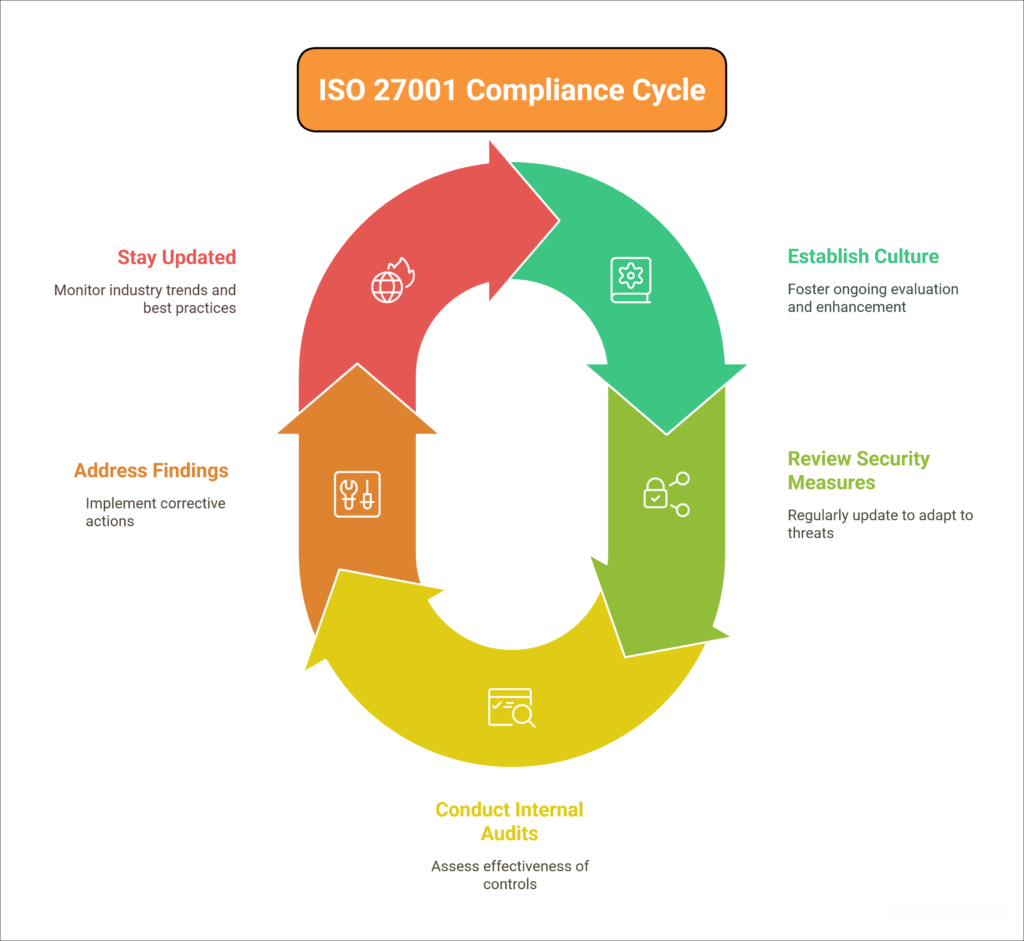
Continuous Improvement and Maintaining Compliance
- Continuously improving your organization’s information security management system is key to maintaining ISO 27001 compliance. Establish a culture of ongoing evaluation and enhancement based on audit findings. Regularly review and update your security measures to adapt to emerging threats and changes within the organization.
- Consider conducting periodic internal audits even outside mandated deadlines to stay proactive and ensure the effectiveness of corrective actions. In the upcoming blog post, we will dive into the best practices for fostering a culture of continuous improvement and compliance maintenance within your organization. Stay tuned for expert advice on sustaining ISO 27001 certification for the long term.
- Continuous improvement and maintaining compliance with ISO 27001 standards is crucial for protecting your organization’s sensitive information and maintaining a high level of security. To achieve this, it’s important to establish a culture of ongoing evaluation and enhancement within your organization.
- One key aspect of continuous improvement is regularly reviewing and updating your organization’s security measures to stay ahead of emerging threats and changes within the organization. This may involve conducting periodic internal audits to assess the effectiveness of your security controls and identify areas for improvement.
- It’s also important to address any findings from audits or risk assessments promptly and thoroughly, implementing corrective actions to mitigate any identified vulnerabilities. By proactively addressing security weaknesses, you can strengthen your organization’s overall security posture and reduce the likelihood of a security breach.
- In addition to internal audits, it’s also important to stay up-to-date on industry best practices and emerging trends in information security. This can help you identify new threats and vulnerabilities that may impact your organization and allow you to adjust your security measures accordingly.
Overall, fostering a culture of continuous improvement and compliance maintenance within your organization is essential for sustaining ISO 27001 certification for the long term. By regularly evaluating and enhancing your security measures, you can better protect your organization’s sensitive information and reduce the risk of a security breach. Stay tuned for more expert advice on how to achieve and maintain ISO 27001 compliance.
Conclusion
Fostering a culture of continuous improvement and compliance maintenance is crucial for sustaining ISO 27001 certification in the long term. By conducting regular internal audits, reviewing security measures, and staying proactive in addressing emerging threats, organizations can enhance their information security management systems. Remember, compliance is not a one-time task but an ongoing commitment to safeguarding sensitive data and maintaining trust with stakeholders. Stay tuned for more expert advice and practical tips to help your organization excel in its ISO 27001 compliance journey. Thank you for following our ultimate guide to conducting internal audits for ISO 27001.