
Overview of ISO 27001
ISO 27001 is an international standard for Information Security Management Systems (ISMS) that helps organizations protect their sensitive data and information. However, there are still many misconceptions surrounding this important certification. In this blog post, we will debunk some of the top myths and misunderstandings about ISO 27001, providing clarity and insight into the true benefits and requirements of this essential standard. Stay tuned to learn more about how ISO 27001 can benefit your organization and dispel common myths about its implementation and maintenance.
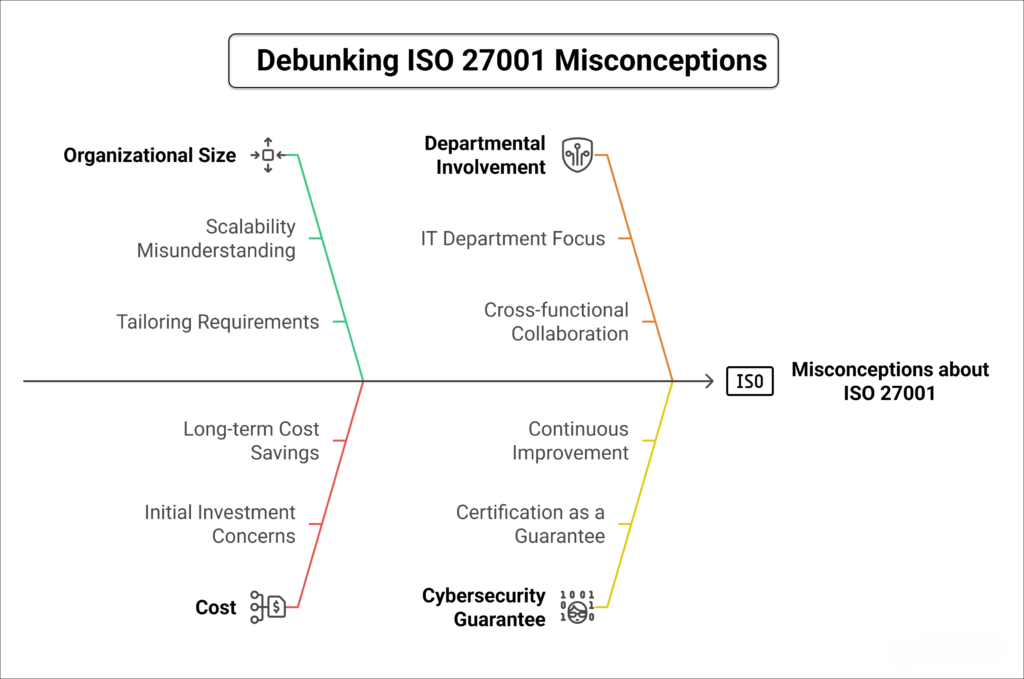
Misconception #1: ISO 27001 is Only for Large Organizations
- One common misconception about ISO 27001 is that it is suitable only for large organizations. This is not true. The standard is designed to be scalable and can be implemented by organizations of any size, from small startups to large corporations.
- In fact, ISO 27001 can provide significant benefits to smaller organizations by helping them establish a robust framework for managing information security risks effectively. By tailoring the requirements of ISO 27001 to your organization’s needs and size, you can create a practical and efficient ISMS that aligns with your business objectives.
- There is a prevailing misconception that ISO 27001 is only meant for large organizations, but this notion couldn’t be further from the truth. The beauty of ISO 27001 lies in its scalability, making it a versatile standard that can be tailored to suit organizations of all sizes, from small startups to large corporations. Even smaller businesses can benefit greatly from implementing ISO 27001 as it provides a solid foundation for effectively managing information security risks.
- By customizing the requirements of ISO 27001 to fit the specific needs and scale of your organization, you can establish an Information Security Management System (ISMS) that not only meets regulatory requirements but also aligns seamlessly with your business goals. Keep following us for more insights and revelations on debunking the myths surrounding ISO 27001.
Misconception #2: ISO 27001 is Too Expensive to Implement
- Another prevalent misconception surrounding ISO 27001 is that it is overly costly to implement. While it’s true that there are costs associated with implementing and maintaining the standard, the benefits far outweigh the initial investment. Organizations can control costs by focusing on the essential elements of the ISMS that are most relevant to their business.
- Moreover, the value gained from improved information security practices, enhanced trust from stakeholders, and potential cost savings due to fewer security incidents prove that the implementation of ISO 27001 is a worthwhile endeavor.
- Many organizations mistakenly believe that implementing ISO 27001 is a costly endeavor. However, the initial investment is outweighed by the benefits that come with improved information security practices and enhanced trust from stakeholders. By focusing on the essential elements of the Information Security Management System (ISMS) that are most relevant to their business, companies can effectively control costs.
- Not only does ISO 27001 help prevent security incidents, but it also leads to potential cost savings in the long run. Therefore, it is important for organizations to understand that the implementation of ISO 27001 is a worthwhile and valuable endeavor.
Misconception #3: ISO 27001 is Only for IT Departments
- One common misconception is that ISO 27001 is solely for IT departments. In reality, ISO 27001 is designed to address information security holistically within an organization, involving all departments and employees.
- IT plays a crucial role, successful implementation requires collaboration across various functions, including HR, legal, finance, and operations. By engaging the entire organization in the implementation process, companies can ensure a comprehensive and effective Information Security Management System (ISMS).
- This inclusive approach fosters a culture of security awareness and accountability, positioning the organization for long-term success in mitigating security risks.
Misconception #4: ISO 27001 Certification Guarantees Cybersecurity
- It’s a common misconception to assume that achieving ISO 27001 certification automatically ensures impenetrable cybersecurity. While ISO 27001 sets a robust framework for managing information security risks, it doesn’t guarantee protection against all cyber threats.
- Certification signifies a commitment to upholding a certain standard of information security practices, but it should be seen as a continuous journey rather than a one-time achievement. Organizations must complement ISO 27001 with regular risk assessments, updates to security controls, and ongoing training to adapt to evolving cyber threats effectively.
- It’s a common misconception to assume that achieving ISO 27001 certification automatically ensures impenetrable cybersecurity. While ISO 27001 sets a robust framework for managing information security risks, it doesn’t guarantee protection against all cyber threats.
- Certification signifies a commitment to upholding a certain standard of information security practices, but it should be seen as a continuous journey rather than a one-time achievement. Organizations must complement ISO 27001 with regular risk assessments, updates to security controls, and ongoing training to adapt to evolving cyber threats effectively.
Clearing Up The Misconceptions
Debunking myths surrounding ISO 27001 is essential for a clear understanding of its value. Misconceptions often hinder organizations from fully utilizing the benefits of this standard. Let’s address misconceptions like “ISO 27001 is only for large corporations” or “It’s too costly and time-consuming.” In reality, ISO 27001 is scalable and adaptable to organizations of all sizes, and its benefits far outweigh the initial investment. Stay informed as we continue to unravel more misconceptions and provide valuable insights to help you navigate the world of ISO 27001 effectively.
Conclusion and The Importance Of Understanding ISO 27001
In conclusion, debunking misconceptions about ISO 27001 is crucial for organizations aiming to enhance their information security practices. Understanding the true value of this standard goes beyond mere compliance—it signifies a commitment to safeguarding sensitive data, mitigating risks, and fostering trust with stakeholders. As we navigate through the complex landscape of information security, knowledge about ISO 27001 empowers organizations to implement effective security measures tailored to their unique needs. Stay committed to dispelling myths, embracing best practices, and continuously improving your information security framework with ISO 27001. Stay informed, stay secure.